
Fresh Dates (Routab) or Ripe Dates (Tamr):
What’s the Difference?

If you’re interested in dates, you’ve probably come across two intriguing terms: Routab and Tamr. What’s the difference between these two types of dates? Should you favor one over the other? And how should they be properly stored?
At Tayiba, we carefully import and select both fresh Routab dates and ripe Tamr dates,to cater to every preference: from consumers seeking a soft, indulgent treat to dried fruit enthusiasts looking for a nutritious product. Here’s everything you need to know to better understand… and make the right choice.

Understanding the 3 Stages of Date Maturity

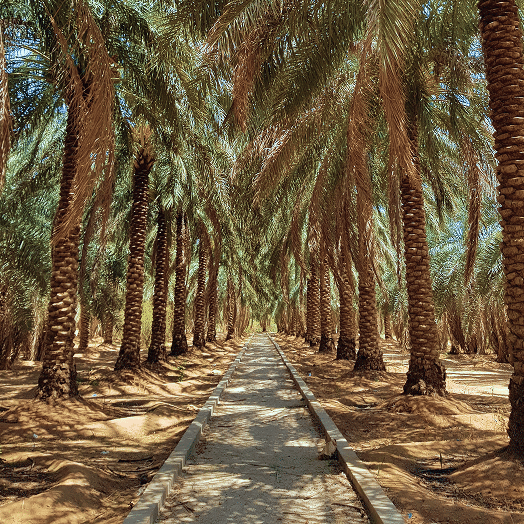
Before differentiating Routab and Tamr, it’s important to know that a date goes through three stages of maturity on the date palm, each with its own characteristics in taste, texture, and shelf life.

Dattes fraîches

Balah: The Crunchy Dates

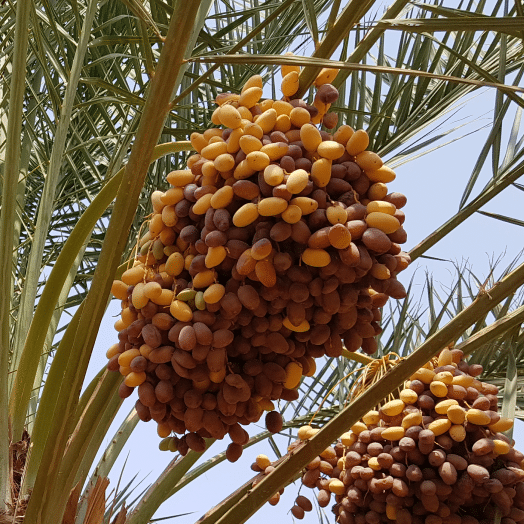
The first stage, called Balah, refers to a date that is still firm, harvested before the fruit has fully ripened. Its texture is crunchy, similar to that of an apple, and it contains very little sugar.

Balah dates are rarely found in regular fruit and vegetable aisles: they are mainly available at the beginning of the season (August–September), still attached to the bunch. Certain varieties, such as the Barhi date, with its light yellow color, are particularly appreciated as Balah for their fresh taste.

Routab: Fresh, Honeyed, and Melt-in-the-Mouth Dates

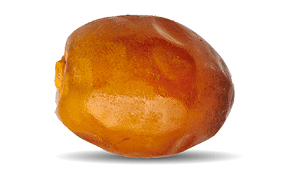
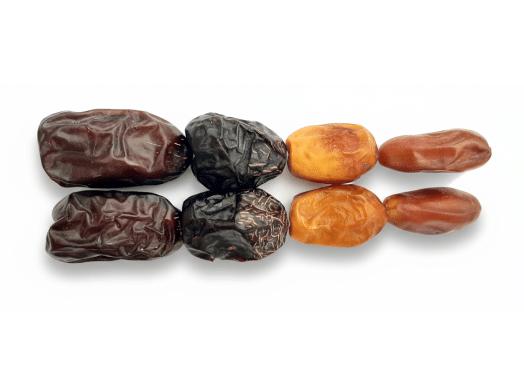
Fresh dates, known as Routab, are soft and moist, as they are full of water from the date palm. Sweet and honeyed, they are rich in fast-acting sugars and energy—perfect for breaking a fast or enjoying as a tasty snack.

However, their high moisture content makes them delicate: they must be stored in the refrigerator and kept within a strict cold chain. Popular varieties offered as Routab include Sukary, Barhi, Ajwa, and Medjool.

Tamr: Fully Ripe, Energy-Packed Dates

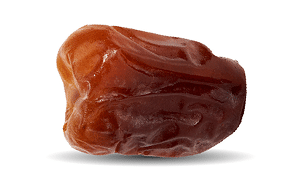
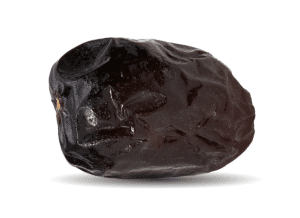
Finally, Tamr dates are those harvested at full maturity. Their texture is firmer, with a dense flesh. Richer in dietary fiber, minerals (such as potassium, magnesium, calcium), and antioxidants, their low moisture content allows them to be stored for a long time without refrigeration.

Tamr dates are available year-round in markets, often imported from the Maghreb, Middle East, and Near East. Well-known Tamr varieties include Deglet Nour, Khudry, Ajwa, Safawi, and Sabaka.

Dattes Routab VS Tamr : quelles différences ?

Routab vs Tamr Dates: What’s the Difference?

The most popular dates are Tamr dates, as they can be stored for a long time without refrigeration, which made them particularly practical before the advent of cold storage: they could be enjoyed at any time of the year, especially in winter.
At that time, Routab varieties were consumed quickly during the harvest. They were rarely sold commercially because they were difficult to transport and spoiled rapidly when exposed to heat. This is why they were less popular.
Today, more and more consumers are drawn to the soft, tender texture of fresh Routab dates, although fully ripe Tamr dates remain the benchmark for nutrition. Here are the main differences to know.

Taste

Fresh Routab dates have a melt-in-the-mouth, almost creamy texture. On the palate, they release flavors of honey and light caramel. Their soft flesh crumbles instantly, like a slightly warm candied fruit.
It’s a gourmet experience, reminiscent of a fresh fig. In contrast, fully ripe Tamr dates are more like dried figs: denser, more concentrated, with flavors of caramel, brown sugar, or molasses.
Their firm, fibrous flesh is chewed slowly (making them an excellent energy snack) and gradually releases their flavors. Less sweet to the taste, they leave a longer-lasting aroma in the mouth.

Usage

Routab dates are enjoyed as a natural treat—perfect at the end of a meal, for breaking a fast, or as a topping on yogurt and desserts. Their intense sweetness and moisture also make them an ideal base for energy smoothies or quick sweet preparations.
Tamr dates, on the other hand, are closer to a complete food: more filling and high in fiber, they are perfect for a healthy snack, sustained energy before exercise, or a hearty breakfast.
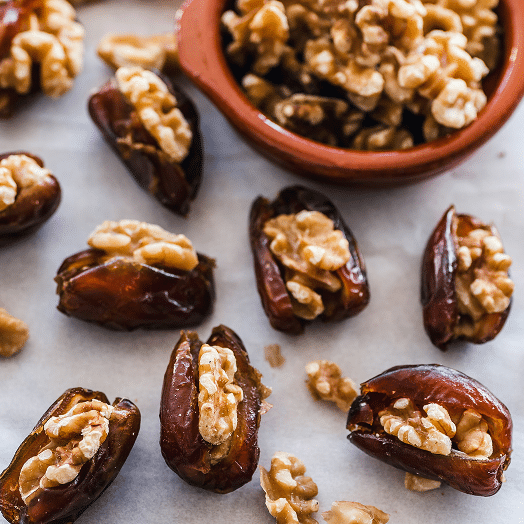
They are also convenient for travel and have historically been a staple food for Bedouins in the desert. They pair well with nuts (almonds, walnuts), fruits (watermelon and melon in summer, oranges in winter), or cheeses, and can be incorporated into savory Middle Eastern recipes.

Fresh Dates or Ripe Dates: Which Should You Choose?

In reality, the choice depends on what you are looking for.

Les dattes fraîches (Routab)

If your main criterion is taste, melt-in-the-mouth texture, and intense sweetness, fresh Routab dates are the best option. They appeal to those who want to indulge in a natural, tasty treat.

Les dattes fraîches

If your goal is a complete, nourishing food, rich in fiber, minerals, and lasting energy, then Tamr dates should be favored.

Les dattes fraîches (Routab)

Finally, for the daily date consumer—whether an athlete or simply a dried fruit enthusiast—Tamr dates are the more natural choice: more stable, easy to transport, and better for sustained energy.

Storage, Transport, and Preservation of Dates

Proper storage of dates is a key concern for retail professionals, as well as for individuals who want to enjoy their dates in the best possible condition. Here again, there are differences between fresh Routab dates and fully ripe Tamr dates.

Routab Dates: A Cold Chain Is Essential

Routab dates are highly sensitive to heat. Their high water content makes them fragile right from harvest. To prevent fermentation or mold, they must be transported and stored under refrigeration (ideally between 4 and 8 °C / 39–46 °F), with careful attention to packaging, which should be airtight and leak-proof.

Depending on the variety, natural sugars may sometimes appear as crystals or juice. This is completely normal and does not indicate spoilage.

In regions without access to refrigeration, such as the Middle East or Near East, they were traditionally stored in vacuum conditions, clay jars, or iron containers without air.

Tamr Dates: The Ultimate Dried Fruit

Tamr dates, on the other hand, have very low moisture content, allowing them to be stored for several months—or even over a year—without refrigeration.

They can be kept at room temperature, in a dry place, away from air. Storing them in an airtight jar helps prevent them from hardening. Tamr dates have always been favored in hot regions without refrigerated storage, as they are ideal for long-term storage and transport.